

Panama City (PTY) Is One of the Best Airports in the Americas.
Here's How to Navigate It

Tocumen International Airport — PTY — is genuinely impressive for a hub of its size.
Premium frequent flyer and business class lounges, a fantastic mix of restaurants and cafés, world-class duty-free shopping, pet relief stations, a sensory room (yes, an actual sensory room — still relatively rare in this part of the world, and a thoughtful touch for neurodivergent travelers and overwhelmed kids alike), AND a connected metro rail terminal that connects you directly into the city.
For many travelers, it’s the first and last impression of Panama, and honestly? It’s pretty cool.
Tocumen takes its name from the indigenous Cueva word for 'place of the tocum tree' — a language now extinct, a tree now largely gone, and an airport that has become one of the most important gateways in the Americas.
PTY is Copa Airlines’ home base and one of the busiest airports in Central America.
It functions as one of the most efficient connection hubs in the entire Americas — and Panama’s geographic position is a big reason why. Sitting at the narrow waist of the continent, Panama is uniquely placed to serve flights between North America, South America, and the Caribbean, often without passengers needing to re-clear security.
Bags are typically checked through automatically.
Sub-one-hour international connections are not only possible here, they’re practically routine.
Flights at PTY are banked in waves — you’ll notice the terminal swell suddenly with arrivals and departures, then quiet down again.
It can feel chaotic in bursts, but it’s not disorganized.
It’s synchronized.
Once you understand the rhythm, it all makes sense.
The metro connection is worth a specific mention.
PTY connects to Panama City via Train Line 2, which is clean, safe, and remarkably affordable. It’s not quite a one-seat ride to historic neighborhoods like Casco Viejo — you’ll transfer to Line 1 for that (+ a short walk into the old quarter) — but for the price, it’s one of the best airport-to-city connections in the Central America region.
Just be aware that Panama City traffic can be unpredictable, so if you’re in a hurry or traveling with a lot of luggage, a rideshare (like Uber or inDrive) or a private transfer may be the more practical call.
Avoid the yellow taxi cabs at all costs.
If you have a daytime layover of seven hours or more, you may have just enough time to do something most travelers never think to do — visit the iconic Panama Canal. As a travel advisor specializing in Panama, I can help you coordinate that excursion so you’re not scrambling on your own.
But about the airport, there are a couple of things nobody really tells you before you get there, so here goes...
On Arrival: Where Do You Actually Go?
PTY is effectively two terminals — and if you don’t realize that, the layout can feel more confusing than it actually is.
Terminal 2 is the newer, brighter of the two, and it’s where most international arrivals processing happens.
Terminal 1 is older and still active, and the two are connected airside — but it can be a long walk if you end up needing to navigate between them.
When you land and deplane into the main hall, international arrivals empty directly into the general terminal.
Not into a separate, secure arrivals corridor.
Not into a dedicated immigration channel with unmistakable signage.
Just... into the mix, surrounded by people who are departing, connecting, shopping, and generally minding their own business.
Announcements are made in Spanish and English, but not always consistently, and the signage — while present — is not what I’d call loud or obvious, especially when you’re jet-lagged and the terminal has just hit its peak wave.
If you have checked luggage, you’re heading to Terminal 2 for Immigration, Baggage Claim, and Customs.
Knowing that before you land makes the whole arrival experience significantly less stressful.
Pass it along to anyone joining you in Panama, because the confusion is real and very preventable.
On Departure: The Surprise Second Screening
Now here is the thing that catches almost everyone off guard.
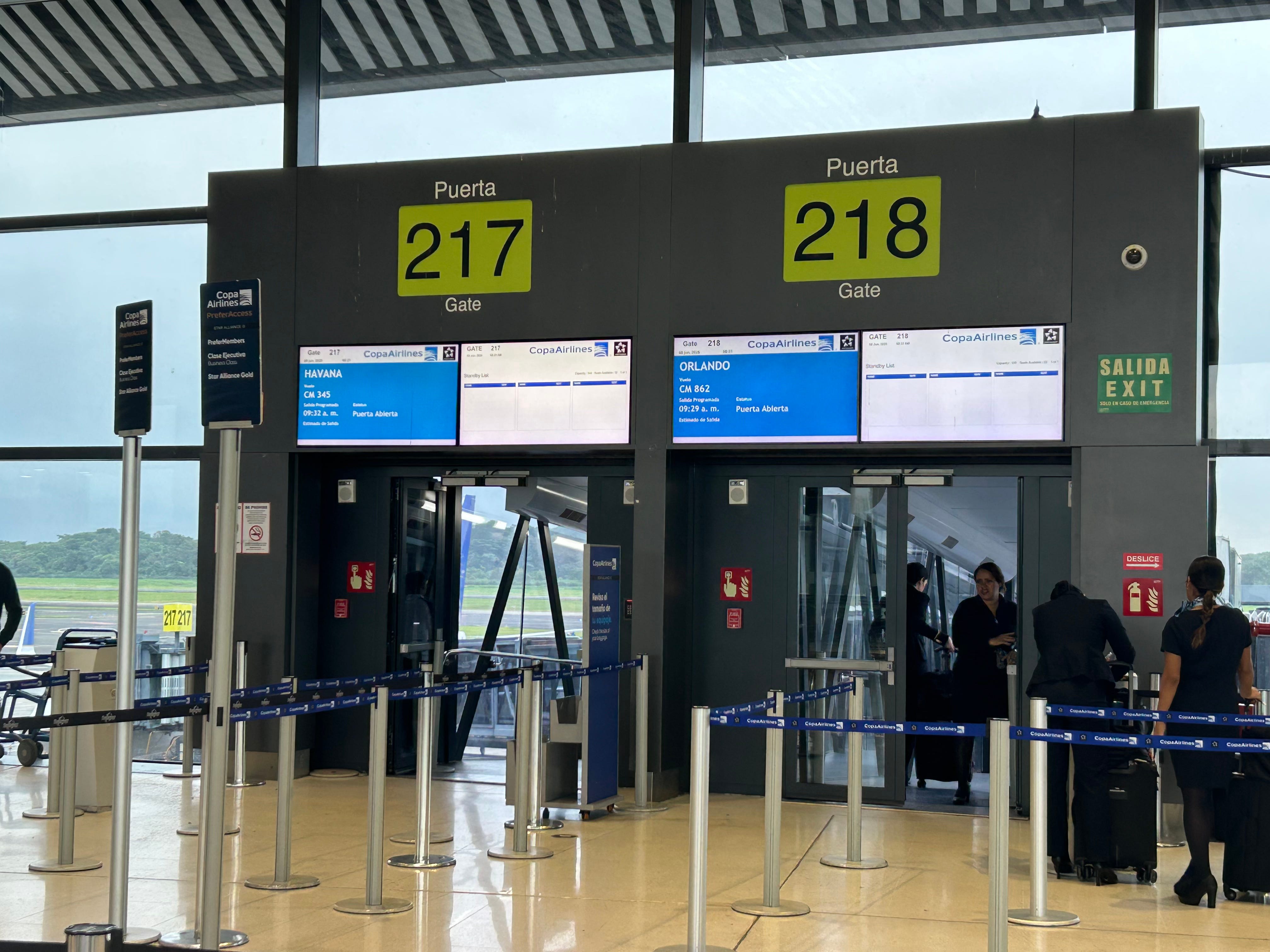
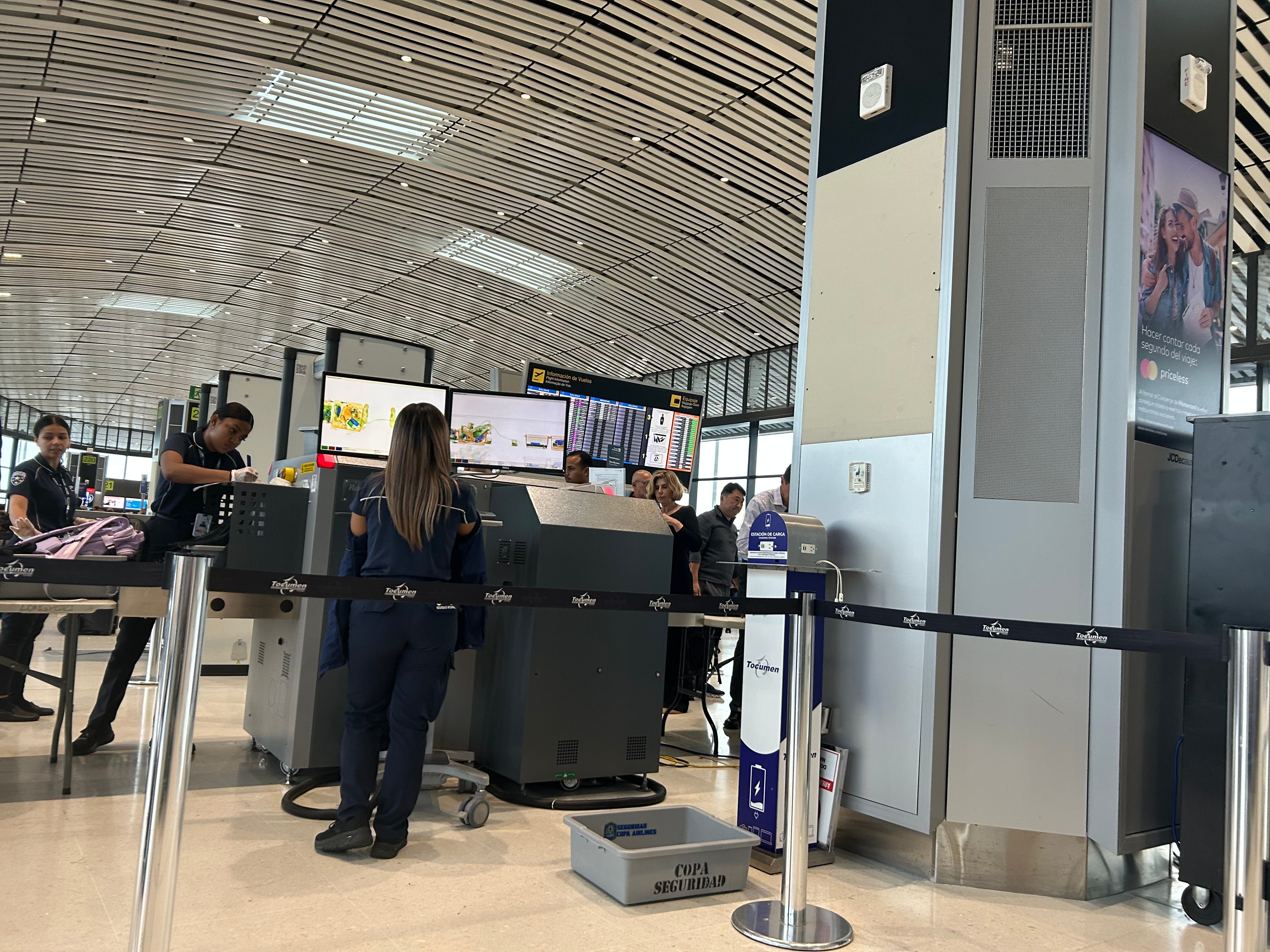
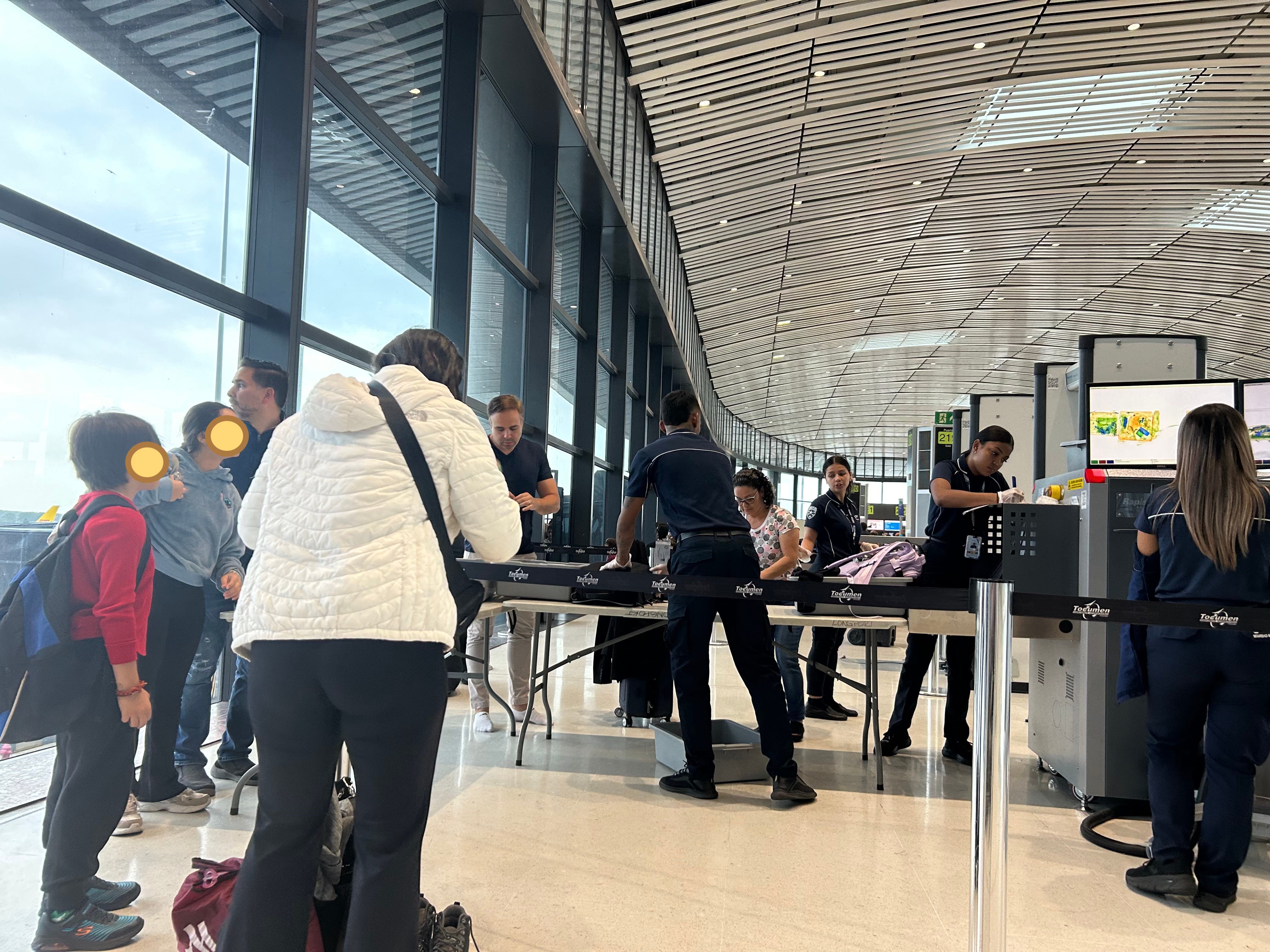
If you are departing on a flight to the United States or Canada — and I am speaking purely from personal observation, not from any official policy — expect a secondary TSA-style security screening at your departure gate.
Shoes off, laptops out, belongings through the X-ray, the whole shebang.
It’s tied to additional security requirements for US-bound flights, but operationally, it shows up in a way that feels very last-minute if you’re not expecting it.
Given that international arrivals and departures share the same terminal space, it makes a certain kind of sense that outbound US flights get an extra layer of screening before boarding. That doesn’t make it any less surprising when you’re standing in line holding a much-desired large coffee you suddenly can’t bring with you.
Which brings us to the liquids situation. The standard 100ml/3.4oz rules are back in effect at that gate screening.
That beverage you grabbed after clearing main security? Finish it before you get there.
Same goes for any oversized beverages from the terminal restaurants — there is no sneaking a 24-ounce iced anything onto a US-bound flight from PTY.
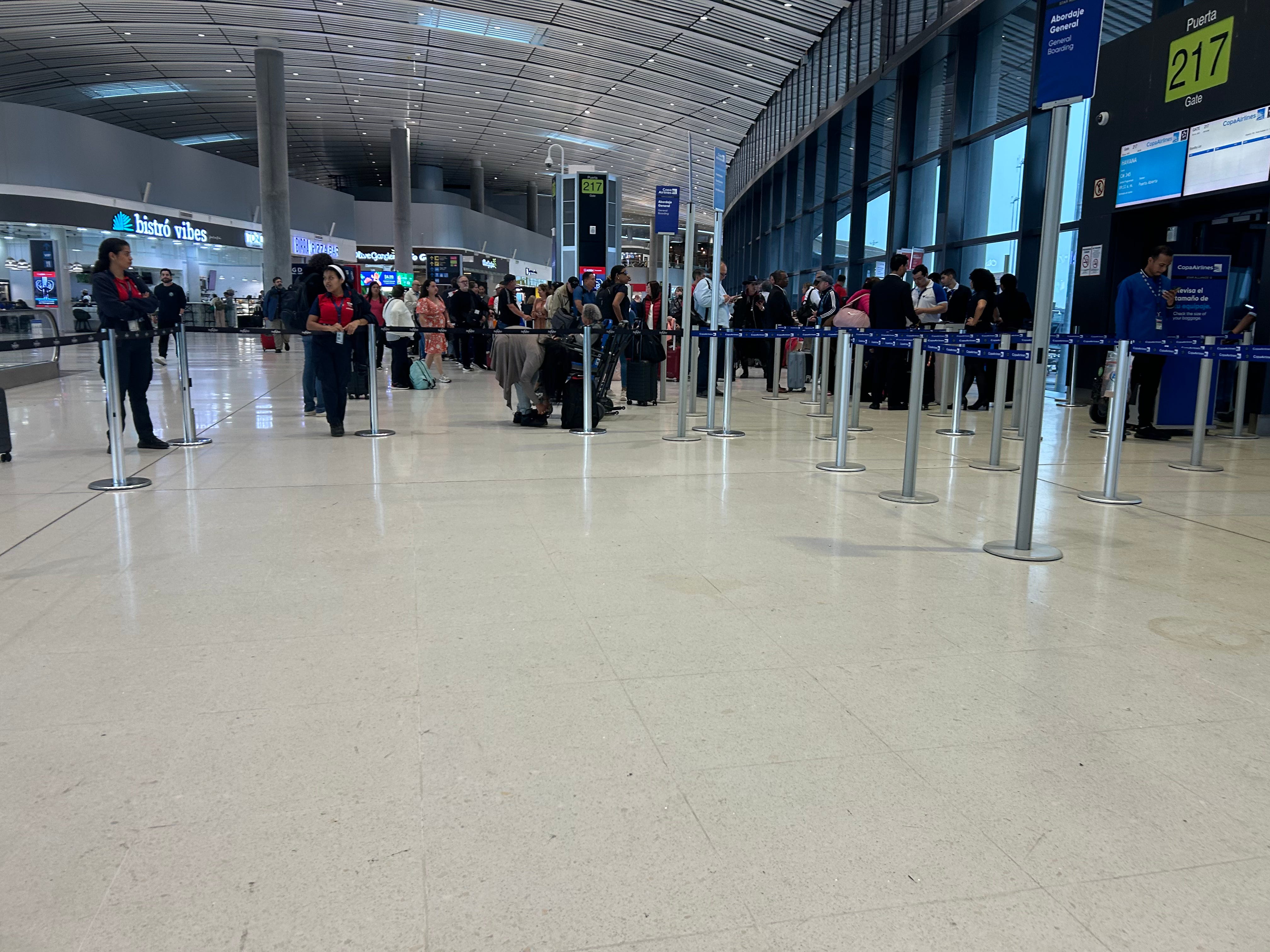
Plan your pre-boarding bathroom stop before or just before you reach the gate area, not after you’re already in the screening line, or worse, sitting in the roped off section of chairs at the gate.
If you or anyone in your travel party has mobility concerns or simply doesn't want to navigate a long terminal walk under time pressure, request wheelchair assistance when you check in — PTY's gates can be a serious hike, and having that support arranged in advance makes the entire departure process more manageable.
The one thing working in your favor: duty-free will deliver any purchases directly to your gate, as they do at most international airports.
So shop freely in the terminal — just don't count on bringing that oversized drink along for the ride. Duty-free has you covered; your iced coffee does not.
If you've flown through Panama and have your own observations to add, drop them in the comments — I'd love to hear what else experienced travelers have picked up.
The more we share, the smoother everyone's travel to and through Panama gets.
This post is free, but if you enjoyed it and would like to support our writing, please do:
💛 Like our post
📝 Reply with a comment
🔁 Restack this post (+ add a note!)
🎟️ Become a paid subscriber
And your support helps more readers considering this journey discover our experience.
xo Ven Sí Puedes | Come If You Can and Real Talk Panama | Expat Life
I recently had a nice experience in the PTY airport, surprise TSA check notwithstanding. I was flying to Mexico from Puerto Rico (the reason I had to go via Panama is a story for another time), and even though PR has great food, a little food cart in the PTY airport had the best empanadas I've had in a long time. Also, I noticed that announcements and signage were also in Portuguese - which makes sense, since Copa does fly to Brazil. I have family there so I may be coming this way again! And I will definitely schedule a long layover so we can explore Panama City along the way.
After spending almost 20 USD on drinks, that second "tsa" check was quite the expensive shock! And Copa barely slaked my thirst in flight with the tiniest cup of water. Trying to figure out how to overcome dehydration the next time I leave Panama!